Saving money feels like a big challenge. I’ve been there, struggling to keep my budget tight and grow my savings account. It’s hard for most people at some point.
I spent time researching and learning from past errors. I found effective ways to save money that really work. This blog will share those methods, like setting clear goals and shopping smarter.
We’ll talk about how budgeting apps can help and why having an emergency fund is key.
Stay with me – you’ll learn something useful!
Key Takeaways
- Make a budget to watch your spending and save money. Apps can help with this.
- Set clear savings goals for short-term and long-term needs. Put aside money from every paycheck into savings.
- Use the 30-Day Rule to stop impulse buys, saving cash for more important stuff.
- Cooking at home saves more money than eating out often does.
- Improve your financial skills by reading books and taking online courses on managing finances.
Develop a Practical Budgeting Plan


I make a budget to track my income and expenses each month. Budgeting apps help me keep it all organized in one place.
Track All Expenses and Income

Tracking every dollar is key for managing money well. Here’s what works for me:
- I note down all expenses, no matter the size.
- Every bit of income, including from side jobs, gets logged in a notebook.
- Apps like Mint show my spending trends over months.
- I compare expected and actual spending monthly.
- Reviewing credit card statements online helps avoid unexpected bills.
- Setting a weekly budget for groceries and dining out prevents overspending.
- My paychecks go into a checking account. From there, I allocate funds to savings or pay off high-interest debt like student loans and credit card balances.
- Saving a bit for an emergency fund each month is critical; it grows over time.
- Watching regular bills like cell phone plans and car insurance ensures I don’t overpay. Shopping around can find better deals.
Also:
- Keeping track of electric bill changes highlights energy usage; smart thermostats could cut costs here.
By monitoring both spending and earnings, every dollar is put to good use, helping achieve financial goals through smart decisions.
Utilize Budgeting Apps and Tools

I started using budgeting apps and spreadsheets to manage my finances. These tools help me see where my money goes each month, allowing for better planning. They’re great for customizing a financial plan.
Budgeting helps in not just monitoring expenses but also in saving more effectively. Regular updates to these tools help me stay disciplined financially. I always know how much money is available for groceries or an emergency fund, eliminating the need to guess.
The start of saving is now, with helpful tools easily accessible.
Set Clear Savings Objectives

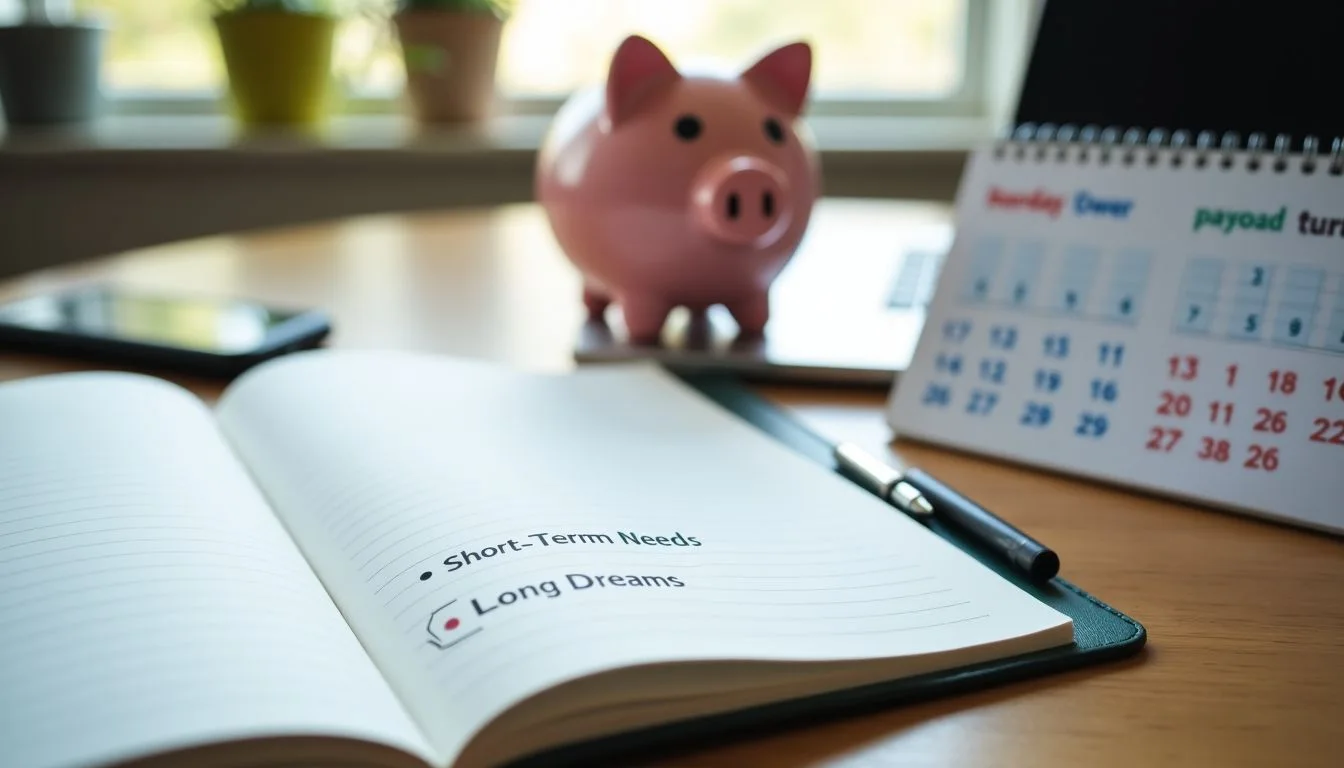
Set savings goals, like building an emergency fund or saving for a trip. Automatically put money in a savings account each paycheck to grow your future funds.
Define Short-Term and Long-Term Financial Goals

Managing my finances better, I adhere to these steps:
- Initially, I address immediate objectives like saving for a vacation or settling credit card debt, which keeps me directed.
- Following this, long-term plans are considered. Aspects such as home purchase or setting aside for retirement require consideration too.
- Establishing an emergency fund is vital. I target to save six months’ worth of living costs for preparedness.
- High-cost debt needs quick action. Clearing it promptly aids in saving on future interest payments.
- Contributing to a retirement fund, for instance, an IRA or Roth IRA, ensures my financial safety.
- Handling educational costs follows. Whether settling student loans or saving for advanced education, prior planning is beneficial.
- Health care savings are critical. Utilizing a Health Savings Account (HSA) aids this objective effectively.
- For an overview of everything, I utilize budgeting apps. They assist in monitoring progress for each financial goal efficiently.
- Lastly, curtailing unnecessary expenses enhances the amount available to meet these targets.
By persistently concentrating on these points, I steer myself to accomplish stable and secure finances without sacrifice.
Automate Savings Transfers

I use apps and online services to automatically move money into my savings. This method keeps me from forgetting to save. By doing this, I don’t see the money in my checking account, which helps cut down on unnecessary spending.
Saving this way speeds up progress toward my financial goals. Every payday, part of my salary goes directly into a high-yield savings account or mutual funds for retirement. This automatic process grows my emergency fund and boosts my investments over time.
Cutting back on extra spending also helps grow savings faster.
Cultivate Smart Spending Practices


To spend smarter, I cut back on impulse buys and delay major purchases. This shift helps me manage my money better.
Resist Impulse Buying

I watch my spending habits closely to avoid impulse buying. I notice what triggers these unnecessary purchases. Creating a budget helps me stick to essential expenses, reducing my urge to buy things on impulse.
Budgeting apps play a big role in this process. They track my monthly expenses, showing how small purchases accumulate. This awareness encourages smarter spending decisions. By doing so, I increase my savings for important goals like building an emergency fund and meeting other financial targets.
Apply the 30-Day Rule for Significant Purchases
I use the 30-Day Rule for big purchases. This means I wait 30 days before buying something large. It makes me think if I really need it or just want it. In this time, the desire to buy usually goes away, helping me save money for my emergency fund or pay off high-interest debt like credit cards.
The 30-Day Rule also lets me compare prices or look at used options. Often, better deals show up during this waiting period. By using this strategy, I reach my savings goals and improve my personal finance skills without wasting money on impulse buys from sales signs or online shopping deals.
Conclusion


Creating a budget lets me track where my money goes. I can use budgeting apps to monitor my spending and income effortlessly. Setting specific financial goals helps me focus on saving, whether for the short term or long term.
Automatically transferring money to savings accounts every month boosts my savings without extra effort.
Choosing wisely between needs and wants saves money. Using discount codes and cashback offers reduces expenses too. Avoiding debt with high-interest rates is key; it frees up more money for savings.
An emergency fund provides peace of mind. Cooking at home rather than eating out saves a significant amount of money over time.
Personal finance books and online courses offer fresh insights into managing finances effectively.
Starting these habits now improves my financial future significantly.